Lab coats, gloves and eye protection are standard personal protective equipment (PPE) in laboratories. PPE should be worn while working in a lab and by others present in the space. It is important that PPE is in good condition, selected appropriately and safely handled.
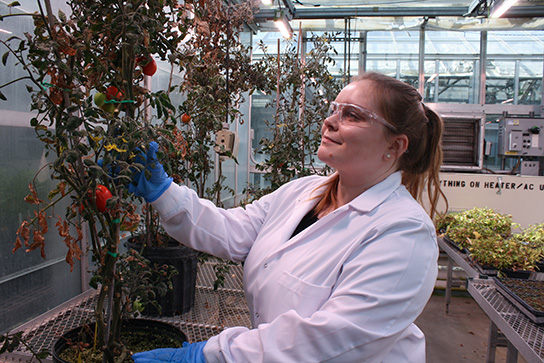
PPE expectations:
- Lab coats
- Long-sleeved and properly sized for the wearer
- Worn closed (e.g., buttoned, snapped, tied)
- Clean (laundered or a fresh disposable lab coat)
- Gloves
-
- Selected based on chemical hazard; nitrile is common (see the Glove Compatibility Chart)
-
- Removed in a way that prevents contamination of the hands. (e.g., “glove-in-glove” method, “beaking” method)
-
- Disposed appropriately after handling hazardous or recombinant materials (see information about glove recycling and biological waste disposal)
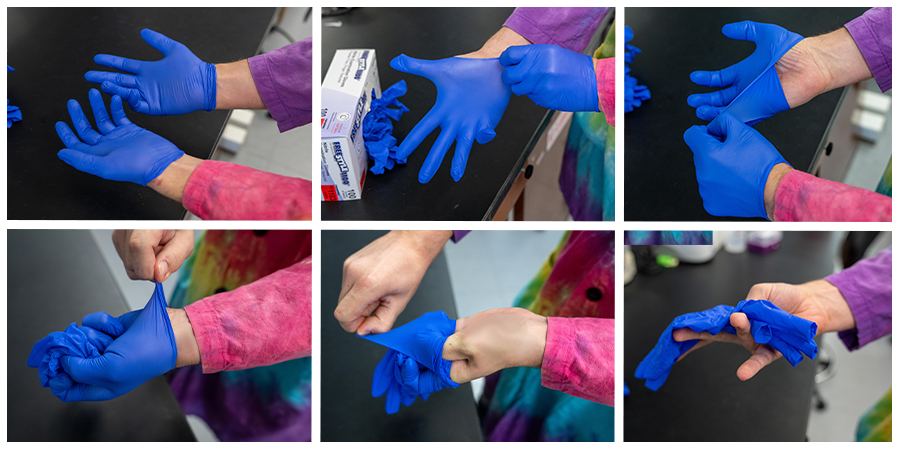
- Eye protection
-
- Protects the front and sides of the eyes (e.g., safety glasses with side shields, safety goggles, prescription safety glasses)
-
- Impact-resistant
-
- Note: Contact lenses may be worn with discretion and in combination with eye protection
Why proper PPE matters
Wearing the correct PPE and handling used PPE properly helps maintain a safe and secure environment. Consistent compliance helps:
- Prevent skin, mucosal or respiratory exposures and lab-acquired infections
- Protect from routine splashes, spills, and airborne particles
- Prevent accidental release of materials from research spaces
- Safeguard research samples from cross-contamination
Additional information about PPE can be found in your lab’s biosafety protocol (Bio-ARROW), UW Researcher’s Biosafety Manual and the EH&S website. The Office of Biological Safety is happy to answer any questions you may have and can provide in-person training by request.
by Megan Dixon and Louise Meske
Megan Dixon is a Biosafety Specialist on the IBC and Laboratory Operations team. She joined EH&S in 2024 and supports the research community through reviewing biosafety protocols and outreach to laboratories.
Louise Meske served as a Biosafety Specialist on the IBC and Laboratory Operations team from 2018 to 2026. She supported the research community by reviewing biosafety protocols, conducting risk assessments and offering assistance to PIs and their teams.
It’s Biosafety and Biosecurity Month 2026! Look out for more biosafety topics each week in October.
Safety has no season!
This year’s Biosafety Month theme is “Safety has no season!”
Learn about the latest biological safety updates that impact labs like yours on the UW–Madison campus, and print the flyer to help spread the word.
Have a biosafety question? Need help? The UW-Madison Office of Biological Safety is ready to serve you!
The UW-Madison Office of Biological Safety is a proud member of the American Biological Safety Association (ABSA).