Many biological research labs at UW–Madison have Biological Safety Cabinets (BSCs) to protect users, research materials and the environment. Keeping your cabinets safe requires careful attention during use and proper preparation for certification. Please see some helpful tips for safe BSC use, and how to prepare for a BSC certification, below.
Safety Tips
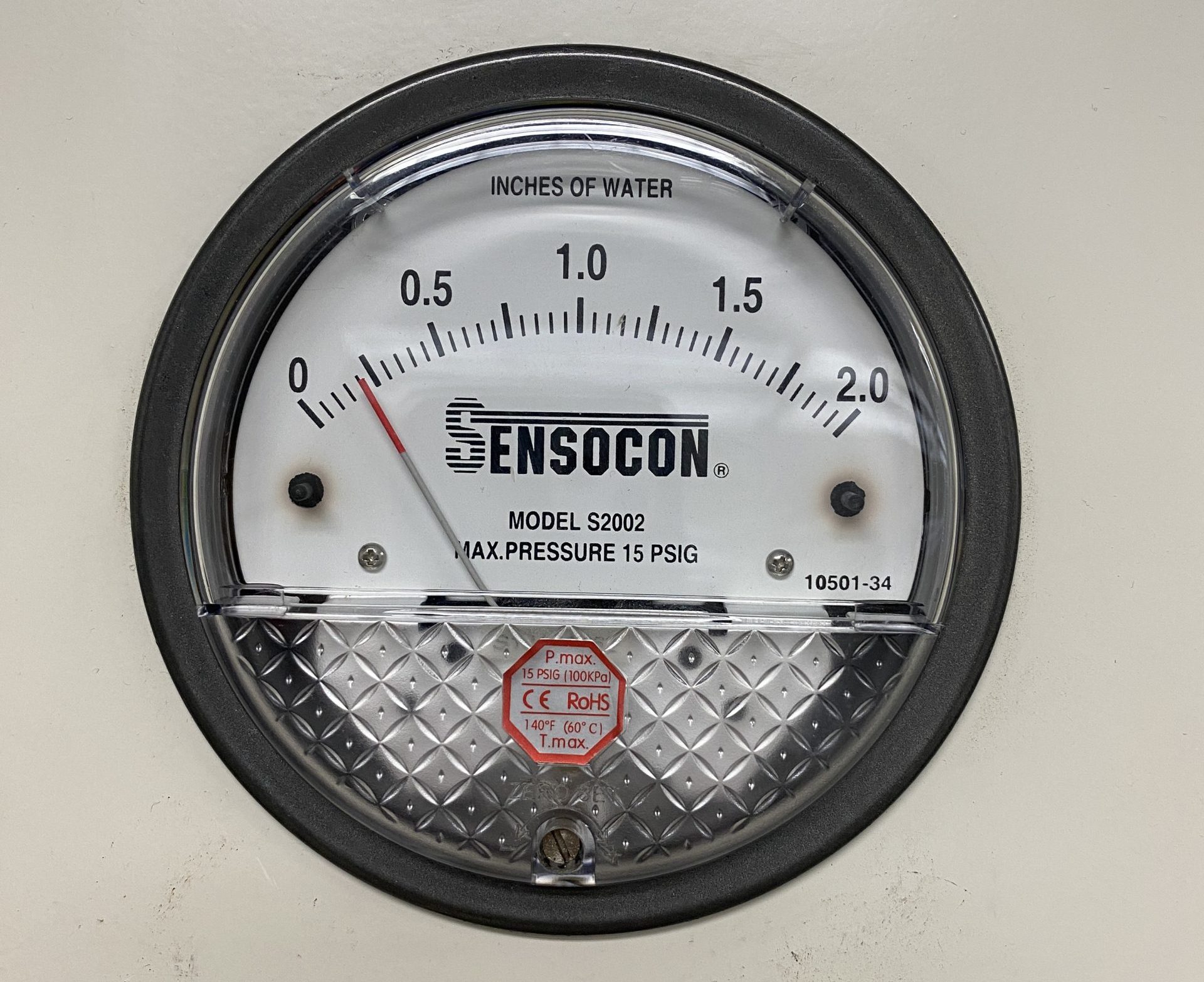
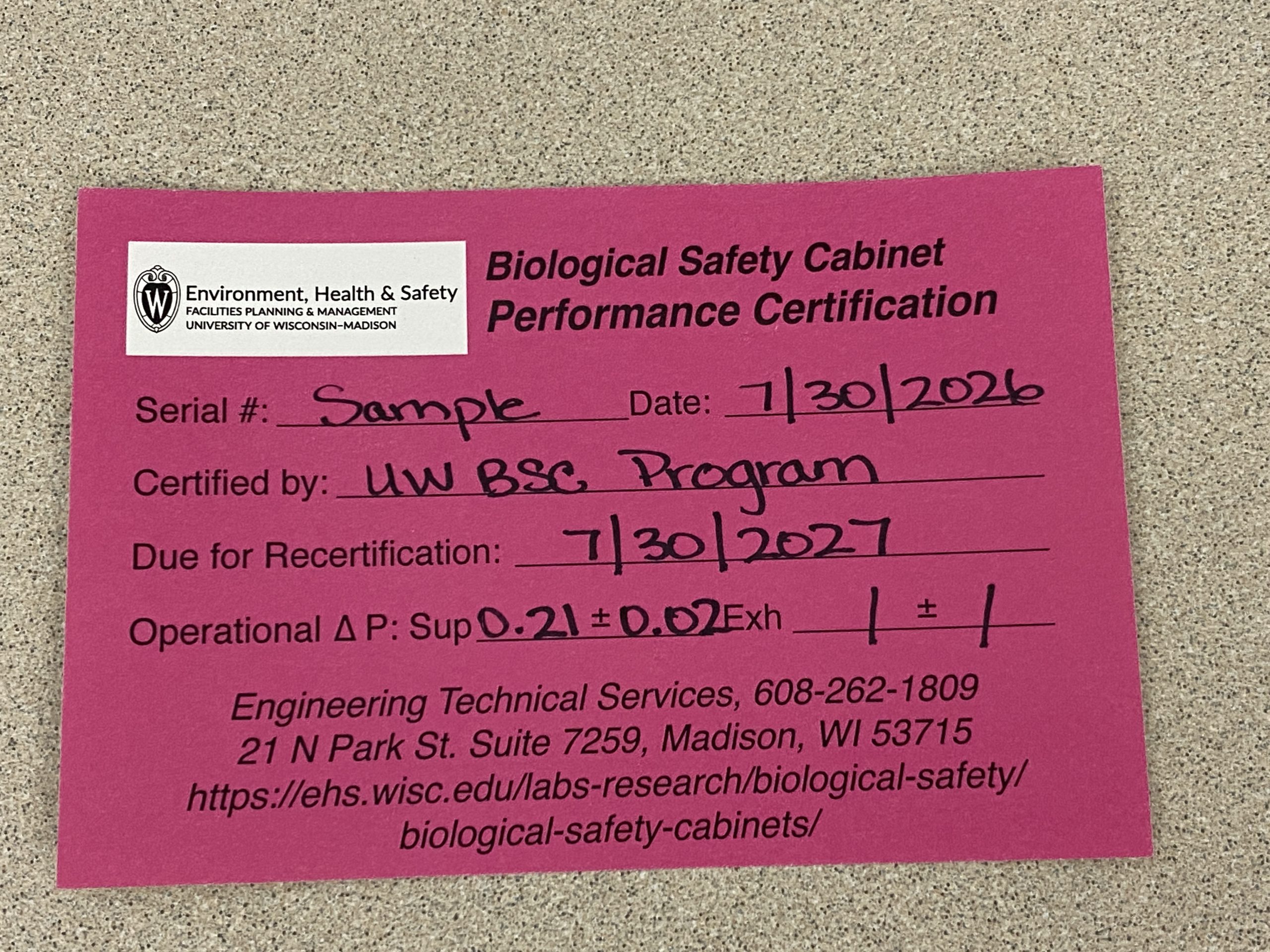
- Monitor daily pressure: Check daily to ensure pressure is within the safe operating range. In the sample below, the gauge pressure is reading approximately 0.21”. Compare this reading with the Operational Δ P: Sup on the certification sticker provided on each biological safety cabinet. If the gauge reading is outside of the allowable range in this example (0.19” – 0.23”), please contact our office at 608-263-2037.
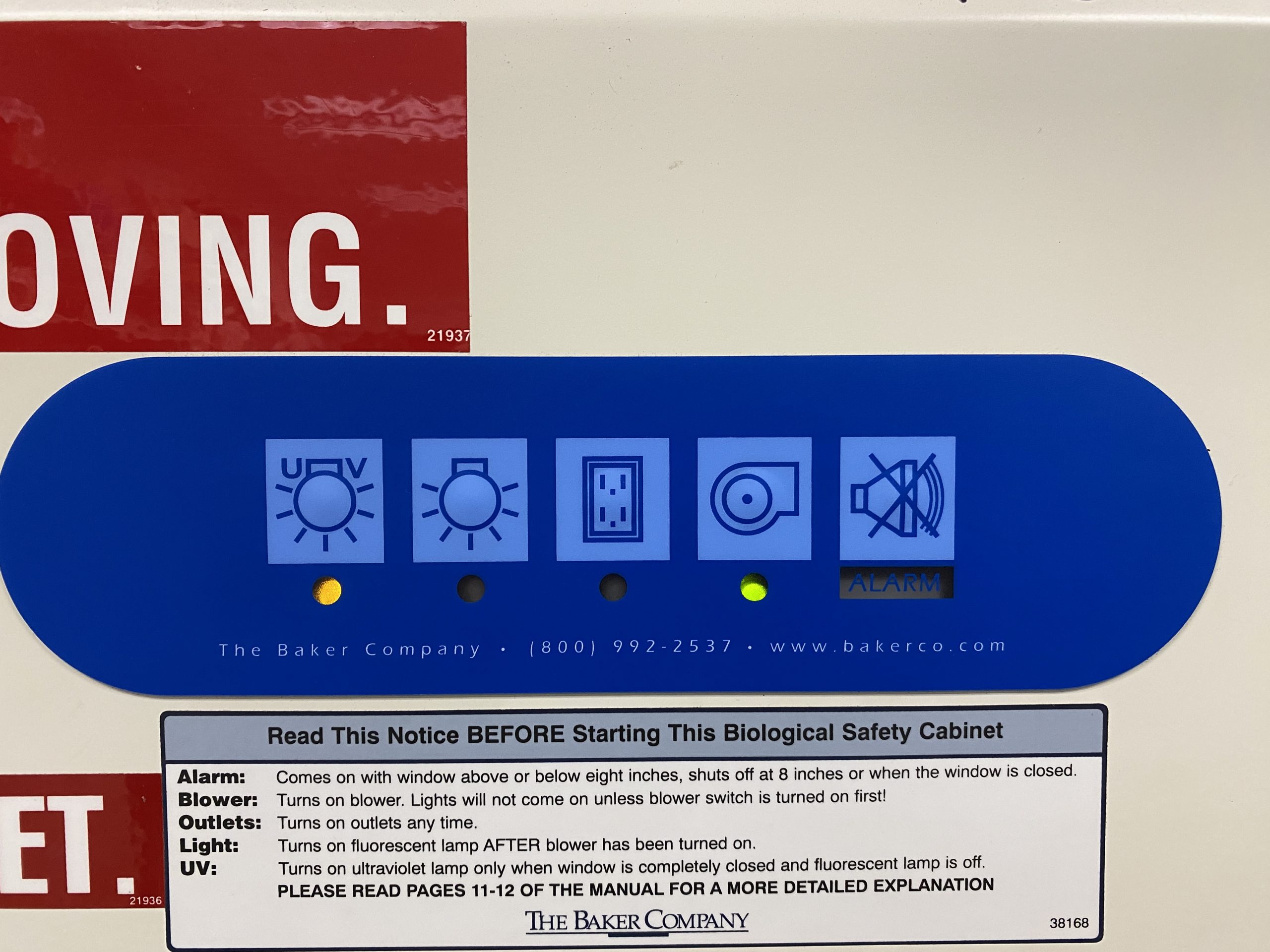
- Use the UV light timer feature: With the sash fully closed, press and hold the UV button on the left side of the touchpad until it beeps. This sets a 15-minute timer for UV and will turn off automatically, preventing premature UV bulb burnout.
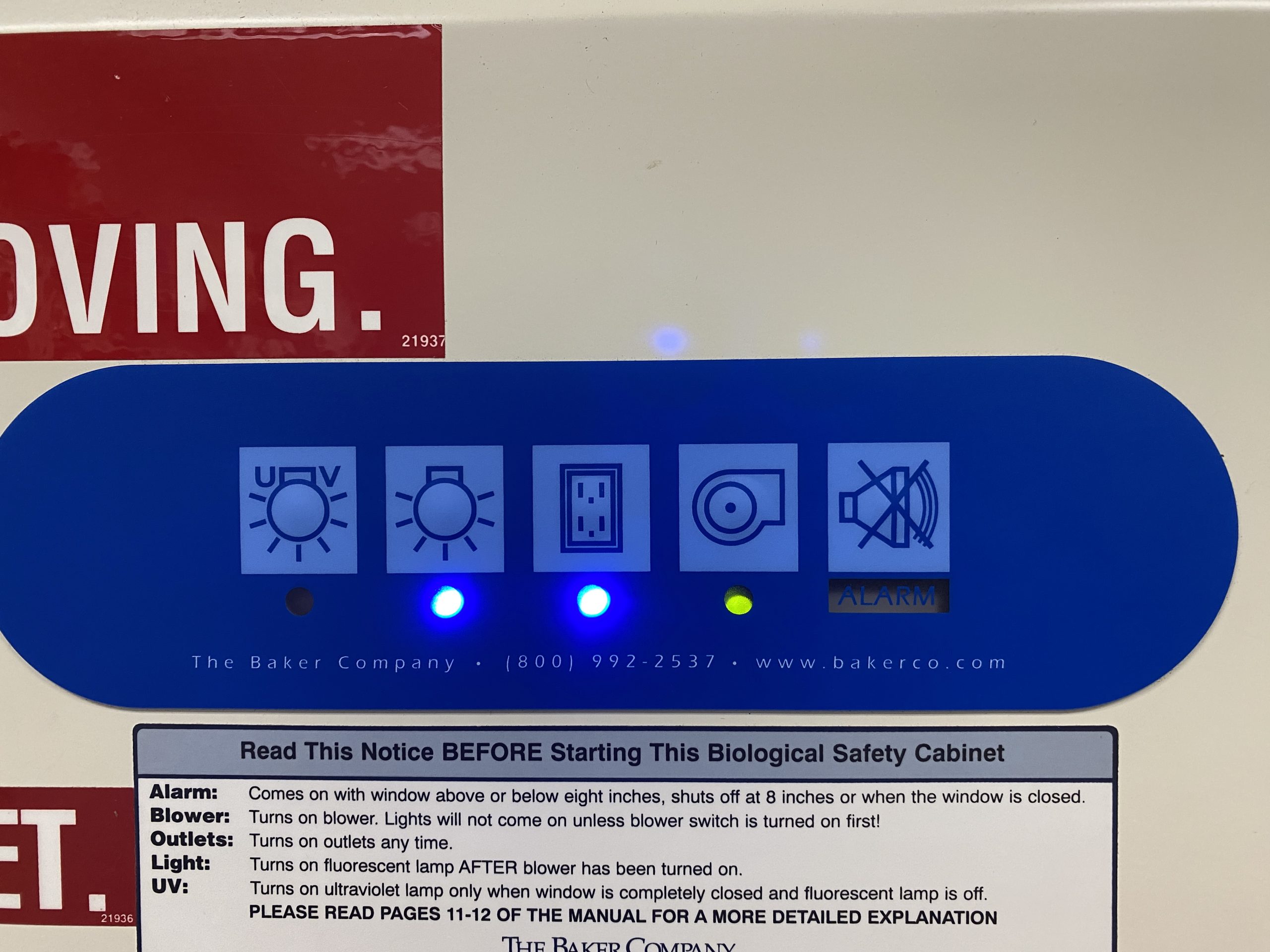
- Troubleshoot outlets: If the outlets are not providing power to equipment within the BSC, please ensure the outlet is turned on using the middle button on the touchpad. When the outlet is turned on, the LED light below the outlet button on the touchpad should be illuminated, as shown below.
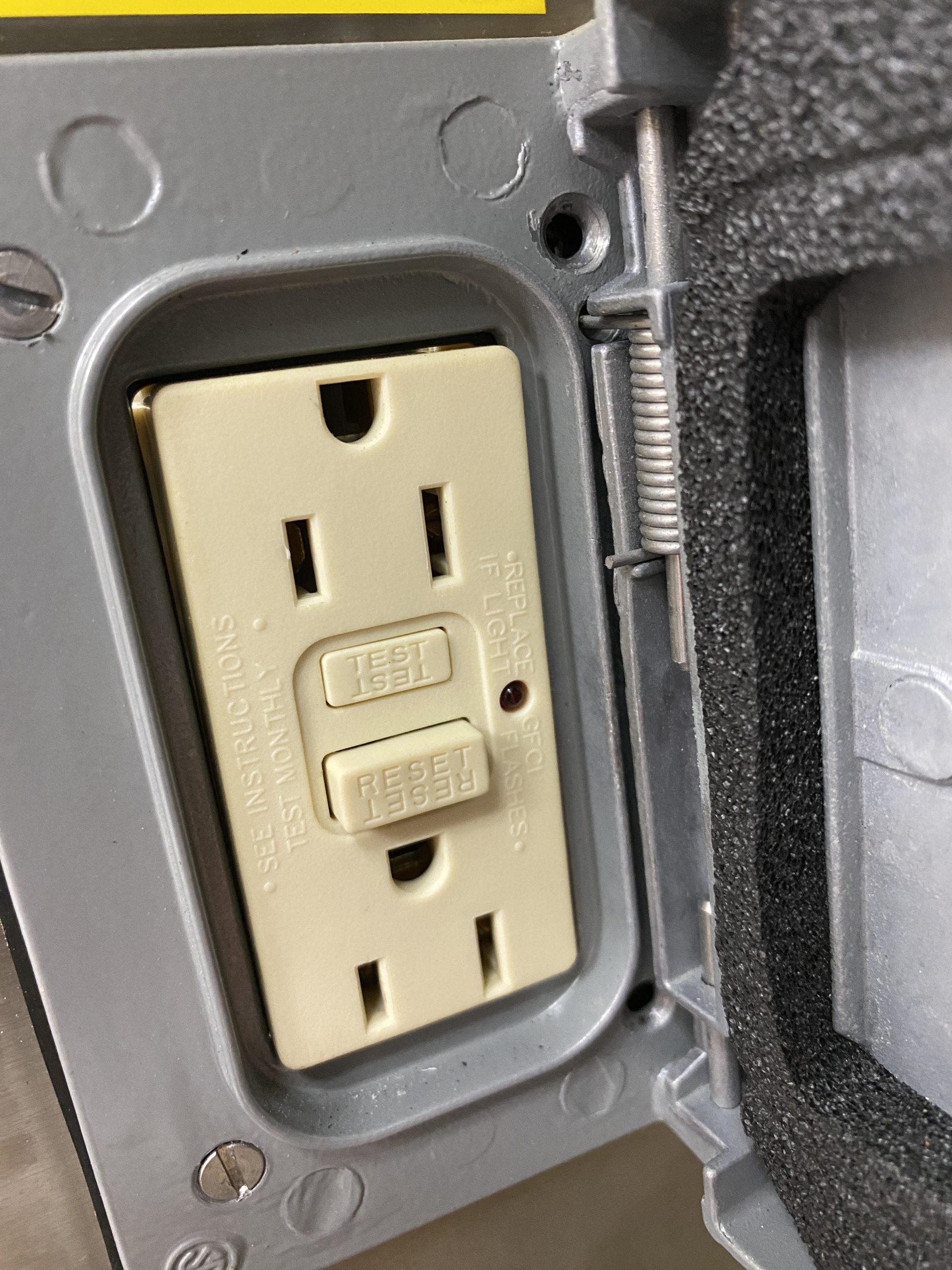
- If the outlets are still not working, reset the GFCI (ground fault circuit interrupter) on the outlet itself. Do this by pressing the TEST button on the outlet. When the TEST button is pushed, the RESET button will pop out, as seen in the image to the left. Next, press the RESET button all the way in to reset the outlet. If there is still no power to your equipment within the BSC, please contact our office at 608-263-2037 or biosafety@fpm.wisc.edu.
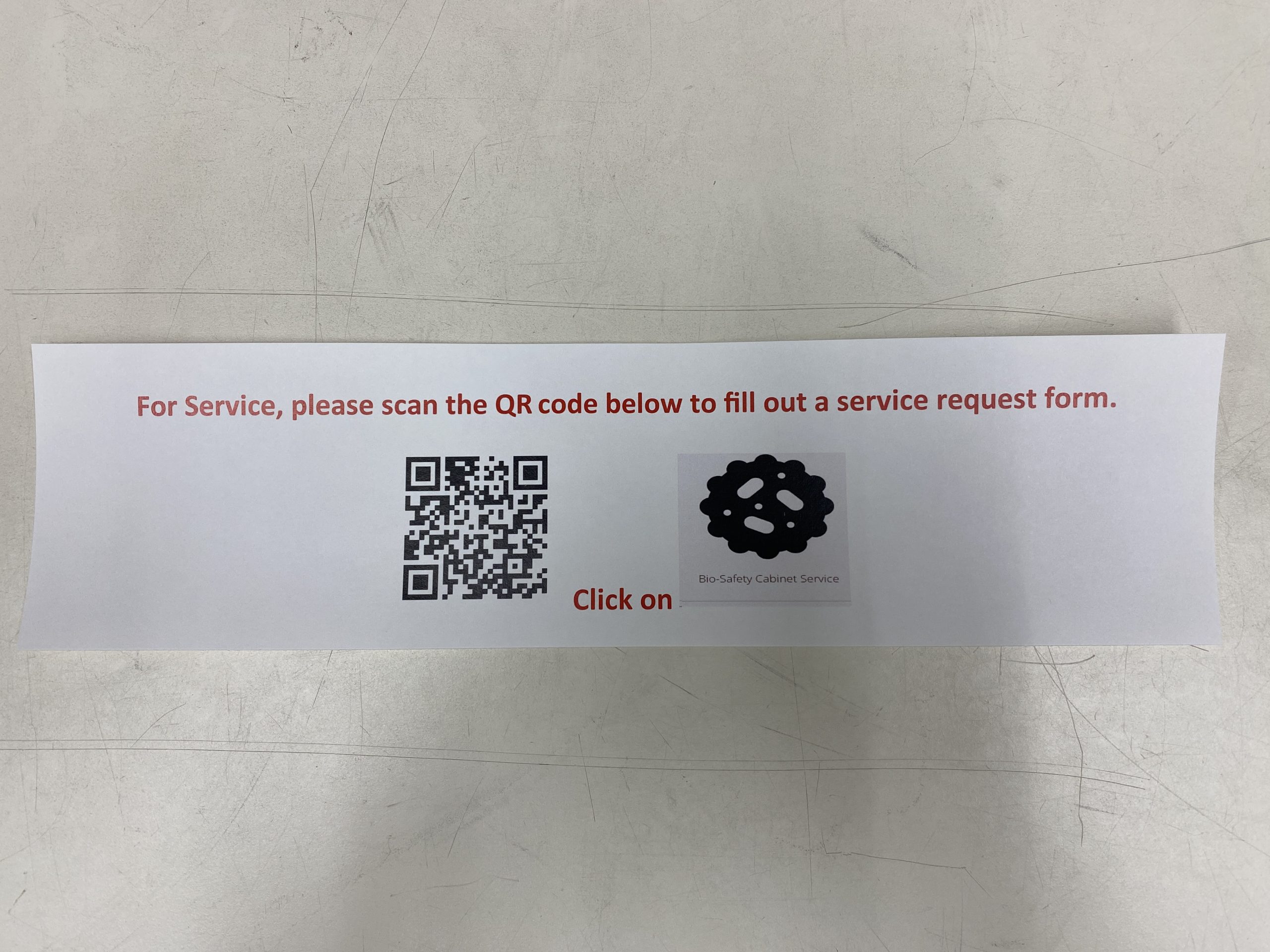
- Report issues quickly: Please notify our office of any issue with the BSC by using the QR code below, or by visiting go.wisc.edu/biosafety-service. Once there, click on the “Bio-Safety Cabinet Service button.
Preparing for certification
To ensure your BSC is ready for certification checks, complete these three simple steps:
- Provide room access: Unlock lab doors on your scheduled service date — which will be communicated with you beforehand — or arrange to have a lab member present to provide access. EH&S does not have keys or card access to all rooms.
- Clear and disinfect the unit: Remove all equipment and materials from the BSC, then thoroughly disinfect all interior surfaces. An empty, disinfected cabinet allows accurate airflow testing and prevents cross-contamination.
Report issues in advance: Please notify EH&S ahead of time of any issues with the BSC. This helps us gather tools and/or parts needed for efficient repair. See QR code above.
- Update lab contacts and funding: Please notify the Biosafety team of any recent changes to Principal Investigators, lab managers, or funding sources by filling out the FP&M Customer Service Number Request Form. This ensures service notices reach the correct people.
by Matt Roth and Tara Dobberfuhl
Matt Roth is a BSC Program Field Supervisor and NSF Accredited Class II Biosafety Cabinet Field Certifier. He joined EH&S in 2022 and supports the Biological Safety Program through cabinet and HEPA filter certifications, repairs, scheduling workflow, and customer service.
Tara Dobberfuhl is a BSC Program Engineer. She joined the BSC program in 2009 and supports the research community through certification and repairs to BSC and other containment devices, as well as maintaining the BSC purchasing specifications.
It’s Biosafety and Biosecurity Month 2026! Look out for more biosafety topics each week in October.
Safety has no season!
This year’s Biosafety Month theme is “Safety has no season!”
Learn about the latest biological safety updates that impact labs like yours on the UW–Madison campus, and print the flyer to help spread the word.
Have a biosafety question? Need help? The UW-Madison Office of Biological Safety is ready to serve you!
The UW-Madison Office of Biological Safety is a proud member of the American Biological Safety Association (ABSA).