 Each year, more than 100,000 minors engage with the university through conferences, camps, clinics, seminars, competitions, field trips, internships and other activities. These experiences represent the Wisconsin Idea in action. While these experiences advance the university’s educational and outreach missions, they also require careful planning to promote the safety and well-being of minors. A minor is any individual under the age of 18. Because they are considered a vulnerable population, additional safeguards are required when minors are participating in university activities or visiting certain campus facilities.
Prior to the start of the activity, it is important to evaluate potential risks associated with the environment and planned activities. Each situation requires assessment of hazards, supervision needs, and applicable policy requirements. To support safe experiences, two key campus policies provide guidance:
UW-1045 Youth Protection Policy
This policy establishes the minimum requirements for university activities focused on serving minors. The policy’s six-part framework outlines the expectations for recordkeeping, background checks, training, supervision standards, emergency planning and incident reporting. These requirements help create consistent practices across the university for activities serving minors.
UW-6106 Minors in Research Laboratories
This policy outlines restrictions and requirements for minors entering, visiting and working in research laboratories. Research laboratories contain unique hazards not found in other campus spaces. Careful risk assessment and mitigation are needed before bringing a minor into a lab.
When planning activities that involve minors, it is important to evaluate the nature of the activity and determine which policy requirements apply. Early consultation with the Office of Youth Protection and Environment, Health & Safety can help identify safety, compliance and risk management considerations before the program begins. Together, these offices provide consultation, resources and guidance to help campus create meaningful experiences for minors while maintaining safe environments for all participants.
by Ashley Rose and Andrea Ladd
Ashley Rose is the Youth Protection Manager in the Office of Youth Protection (OYP). Since joining OYP in 2022, she has led consultation and outreach efforts to support compliance with the UW–1045 Youth Protection Policy. Her work focuses on promoting safe, supportive environments for youth participants across university programs.
Andrea Ladd is the Director of Biological Safety and Biological Safety Officer. She joined EHS in 2016 and oversees the Office of Biological Safety, including IBC and Laboratory Operations, Animal Research Safety, Select Agent/DURC Program and Biocontainment Program.
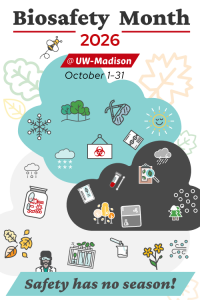
It’s Biosafety and Biosecurity Month 2026! Look out for more biosafety topics each week in October.
Safety has no season!
This year’s Biosafety Month theme is “Safety has no season!”
Learn about the latest biological safety updates that impact labs like yours on the UW–Madison campus, and print the flyer to help spread the word.
Have a biosafety question? Need help? The UW-Madison Office of Biological Safety is ready to serve you!
The UW-Madison Office of Biological Safety is a proud member of the American Biological Safety Association (ABSA).